Security
Regional solidarity grows against destabilizing Houthi attacks
Global condemnation mounts as Houthi missile attacks on Saudi airports threaten regional trade and expose Tehran's destabilizing proxy warfare strategy.
By Faisal Abu Bakr |
Renewed Houthi missile and drone strikes against Saudi Arabia have triggered widespread international condemnation, signaling a unified regional response to aggression.
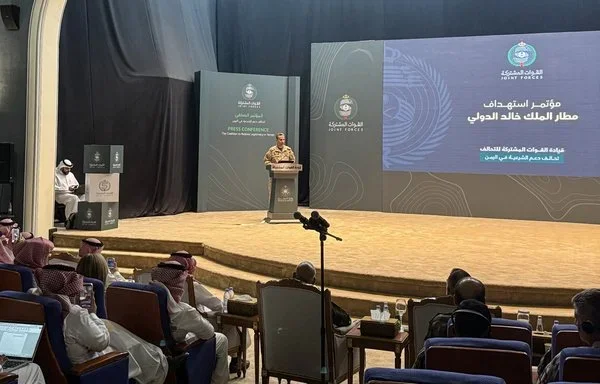
Since October 1, King Khalid International Airport has endured 20 attacks, resulting in 17 fatalities and over 330 civilian injuries.
The Saudi-led military coalition spokesman Turki Al-Maliki revealed on October 15 that Houthis have launched over 1,100 ballistic missiles and 1,100 drones since 2016.
These advanced military technologies, acquired through regional parties, demonstrate a clear intent to endanger Saudi infrastructure and vital trade routes.
Collective resistance against terrorist acts
Global powers and international organizations now firmly view these assaults as severe threats to state sovereignty and regional security.
"These Houthi strikes on Saudi airports constitute blatant acts of terrorism that intentionally target civilian facilities and innocent lives," Abaad Center for Studies director Abdul Salam Mohammed told Al-Fassel.
He emphasized that shifting conflict from Yemen to neighboring states violates international law while deeply provoking the collective sentiments of Arab nations.
Observers argue that targeting Saudi airports highlights the dangerous intersection between local Yemeni conflicts and Iran’s regional expansionism.
Economist Abdul Aziz Thabet warned that the economic repercussions extend far beyond Riyadh, threatening global navigation near Bab al-Mandeb strait.
"These assaults pose an existential threat to regional stability, necessitating a powerful, unified confrontation against the militias and their backers," he said.
Military pressure increases strategic losses
Recent military operations from the Yemeni government, known as the "Dawn of Yemen," have exerted immense pressure on Houthi frontline positions.
Data from October 19, confirms government forces successfully recaptured strategic sites in Marib, Hayfan and the vicinity of Dhubab.
Mounting battlefield setbacks now force the militia into a strategically vulnerable and increasingly defensive position.
Concurrently, Egypt has urged Tehran to halt these reckless escalations and immediately rein in its proxies.
By expanding the scope of their war, the Houthis ensure that Arab nations maintain a shared incentive to act collectively.
The combination of military progress on the ground and international solidarity continues to weaken the Houthi movement's operational capabilities.
Ultimately, the growing consensus serves to increase pressure on Tehran to curtail its influence and halt the spread of regional chaos.
National security interests now dictate that both the government and its international partners accelerate efforts to neutralize these persistent, transnational threats.