Security
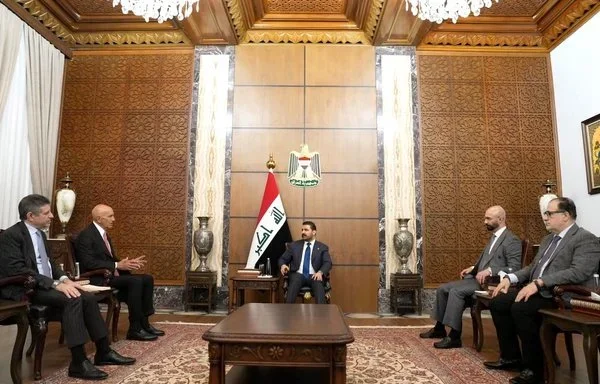
Iraqi government challenges militia influence with American support
Prime Minister Al-Zaidi is aggressively confronting militia power, leveraging robust US support to dismantle funding and restore state sovereignty.
By Anas al-Bar |
The United States is actively bolstering Iraq’s efforts to assert control over illicit arms, uphold national sovereignty and secure institutional legitimacy.
Washington stands firmly alongside the government of Prime Minister Ali al-Zaidi to confront Kataib Hizbullah and other Iran-aligned shadow militias operating within Iraq.
The US has pledged to deploy all available diplomatic, economic and security resources to ensure the nation’s long-term stability and security.
"This commitment remains evident through ongoing, high-level strategic engagements between the two nations," strategy expert Tareq al-Shammari told Al-Fassel
Most notably, President Donald J. Trump held a pivotal phone call with al-Zaidi on November 5 to coordinate mutual interests.
Following this, presidential envoy Tom Barrack visited Baghdad, where he championed a transformative vision for the bilateral relationship.
"Washington is proud to stand with Iraq," Barrack said in a statement on X.
Kataib Hizbullah’s grip is loosening
This high-level diplomatic activity followed a crucial meeting between al-Zaidi and representatives from the energy giant ExxonMobil.
The Prime Minister reiterated his government’s "open-door" policy, specifically designed to cultivate deeper commercial ties with major American corporations.
"Washington has demonstrated full readiness to assist Iraq in neutralizing the armed threats and financial networks sustaining Iranian proxies," al-Shammari.
This sustained pressure provides the government with renewed capacity to dismantle the influence of Kataib Hizbullah.
This group, inextricably linked to the Islamic Revolutionary Guard Corps (IRGC), finds itself increasingly isolated as its once-solid "wall"of militia support begins to fracture.
Other factions, including Asaib Ahl al-Haq, have begun engaging with government plans to consolidate all military power under legitimate state control.
Government rejects militia corruption demands
Negotiations with the "quadripartite Coordination Framework committee" collapsed after Kataib Hizbullah demanded executive positions and political authority as preconditions for disarmament.
The government categorically rejected these demands, viewing them as a cynical attempt to entrench militia control over state institutions.
Al-Shammari characterized this as a persistent effort by the militia to hijack military decision-making while draining national resources for foreign agendas.
Following these failed talks, Prime Minister al-Zaidi dissolved the committee and took personal command of the disarmament process.
In response, Kataib Hizbullah’s leadership launched inflammatory, hostile rhetoric, with security official Abu Mujahid al-Assaf leveling baseless corruption accusations against the government.
Cracking down on financial networks
The government is now utilizing US intelligence to pursue militia leaders for corruption and the misappropriation of public funds.
Investigators are currently targeting multi-million-dollar contracts where Kataib Hizbullah factions utilized front companies to siphon state wealth.
Al-Shammari described this as a "bone-breaking" stage in the struggle, confirming that the government is systematically dismantling the financial infrastructure fueling these violent factions.