Security
Trapped in conflict: The brutal reality for Yemen's migrants
Migrants from the Horn of Africa face horrific exploitation, violence and life-threatening dangers while seeking refuge in war-torn Yemen.
By Faisal Abu Bakr |
As Yemen’s conflict endures, the plight of desperate migrants from the Horn of Africa has worsened significantly.
These vulnerable travelers risk everything to cross into Yemen, only to find themselves ensnared in a humanitarian catastrophe.
Their lives are frequently lost, families are cruelly separated and many face exploitation as "bait" for the Houthi group.
International calls for their immediate protection and social integration are now louder, as stability requires comprehensive humanitarian efforts.
Data from the International Organization for Migration (IOM) reveals a staggering surge in arrivals during September.
Roughly 11,841 migrants arrived that month, pushing the year-to-date total to 134,100, already eclipsing 2025’s annual figure of 110,144.
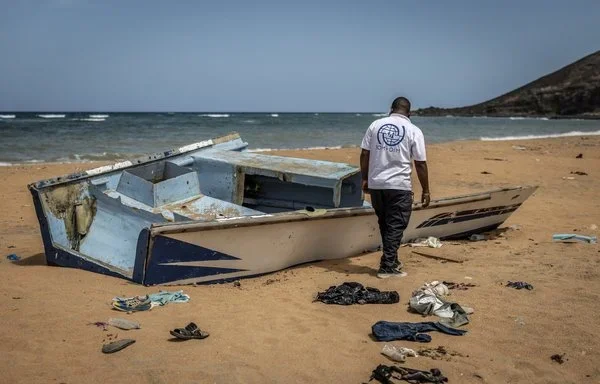
The deadly nature of this maritime journey was underscored by a tragic boat sinking off Djibouti’s coast on the night of October 8–9.
At least 139 migrants perished and another 84 remain missing while seeking work in Yemen and the Gulf states.
Perilous sea journeys toward uncertain futures
Thousands of migrants leave the Horn of Africa, chasing security and employment, but instead encounter a nation shattered by relentless war.
Beyond the treacherous waves, they face systemic abduction, detention and forced recruitment by armed factions.
"Migration to Yemen stands as one of the region’s most complex humanitarian tragedies," Abdul Rahman Berman, executive director of the American Center for Justice (AFC), told Al-Fassel.
"Migrants survive the fatal sea voyage only to arrive in a country plagued by war and institutional collapse," he added.
Berman emphasizes that their suffering continues inside Yemen, where they endure kidnappings, physical violence and profound psychological trauma.
Human rights advocates insist that entering the country through irregular channels does not invalidate fundamental human rights.
Exploitation by armed factions continues unabated
The pervasive presence of armed groups transforms this crisis into a tool for military and political agendas.
Migrants are frequently coerced onto front lines with empty promises of food, water, or meager payments.
"The Houthi group actively exploits migrants by forcing them into smuggling weapons, transporting narcotics and direct combat," Abaad Center for Studies director Abdul Salam Mohammed told Al-Fassel.
He notes that traffickers also hold migrants for ransom, profiting from their extreme economic vulnerability while inflicting deep, lasting psychological scars on victims and their families.
Despite this oppression, Yemen’s struggling economy relies heavily on migrant labor, which is crucial for potential postwar recovery.
Activists argue that establishing a robust legal framework to regulate migration is essential to combating trafficking and ensuring fair working conditions.
"Migrants are not merely statistics; they are human beings with dignity and they should not pay the price for a war where they have no stake," Berman concluded.