Security
Iraq integrates Yazidi fighters to secure Sinjar
Thousands of Yazidi fighters surrender weapons to Baghdad, marking a major step toward normalizing security and stabilizing the Mount Sinjar region.
By Anas al-Bar |
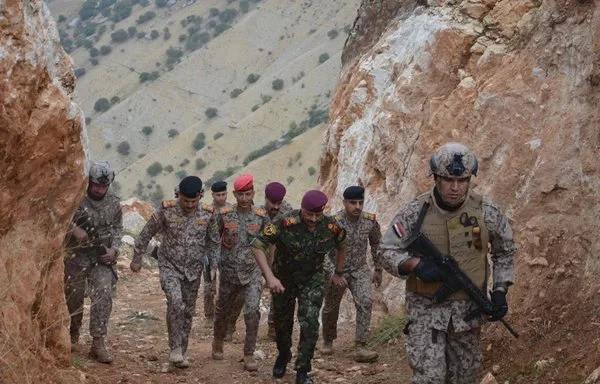
Thousands of Yazidi fighters stationed on Mount Sinjar surrendered their weapons to Iraqi forces on October 26.
This process officially dismantles the Sinjar Resistance Units (YBS) and integrates them into formal state institutions.
Under the signed agreement, 4,165 male and female fighters will be incorporated into the formal security and military apparatus of the state.
Fighters have officially surrendered their strategic bases atop the mountain, including the Tunnel (al-Nafaq) and Citadel (al-Qalaa) sites.
These locations previously served as vital logistical hubs and weapons depots used to defend the region since 2014.
Responsibility for maintaining order now rests entirely with security forces, marking a major shift in local governance.
Government committees currently implement the plan, assigning fighters to the army, federal police, or the border guard.
Those choosing to return to civilian life will receive support in finding employment and re-integrating into their communities.
State authority replaces informal militias
Military expert retired Lieutenant General Jalil Khalaf al-Muhammadawi described the integration process as a decisive step toward restoring the rule of law.
"It is a move in the right direction toward strengthening the foundations of the state and ending informal groups," he told Al-Fassel.
These units formed immediately following the brutal "Islamic State of Iraq and Syria" (ISIS) invasion of Sinjar in 2014 when local Yazidis took up arms.
"This move aligns with government plans to ensure all arms remain exclusively with legitimate state forces," al-Muhammadawi noted.
The government praised the Yazidis for their commitment to national principles and their past role in confronting terrorism.
Sabah al-Nuaman, spokesperson for the Commander-in-Chief of the Armed Forces, emphasized that the constitution prohibits the formation of military groups outside state structures.
"The agreement establishes a new phase of security responsibility in Sinjar," he said in a statement.
Sinjar moves toward lasting stability
Since its liberation in 2014, Sinjar has grappled with complex geopolitical conflicts and intense internal power struggles.
The Sinjar units previously aligned with the Kurdistan Workers' Party (PKK), creating significant security tensions and diplomatic friction with Turkey.
However, the PKK’s recent cessation of armed activities and withdrawal from Iraq have significantly eased these local tensions.
This transition paves the way for a national dialogue focused on reviving the 2020 normalization agreement.
Al-Muhammadawi expressed hope that this decision will encourage the return of residents currently living in displaced camps within the Kurdistan Region.
"All remaining militias must follow this example by complying with the Commander-in-Chief’s directives and orders," he added.
The government remains determined to solidify state authority while confronting both rogue armed actors and remaining terrorist elements.