Economy
Iranian drones threaten Gulf economic stability
The Iranian regime's use of inexpensive drones and regional proxies undermines Gulf security, damaging critical oil infrastructure while attempting to force diplomatic concessions.
By Samah Abdul-Fattah |
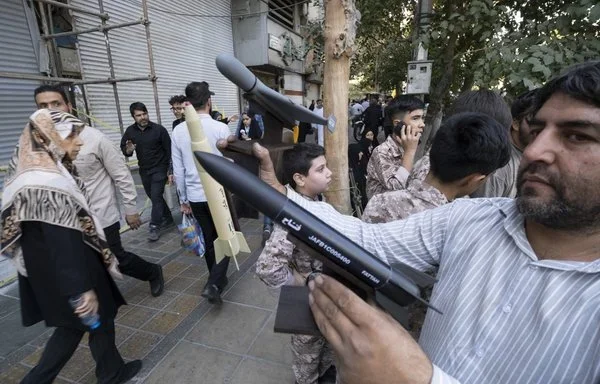
The Islamic Revolutionary Guard Corps (IRGC) systematically supplies low-cost attack drones to proxies in Yemen and Iraq.
These weapons strike essential oil infrastructure in the Gulf, aiming to inflict significant losses and pressure nations into unfavorable bilateral agreements.
By dismantling Gulf unity through these covert operations, Iran seeks to project influence while avoiding direct accountability for these aggressive acts.
"The IRGC has prioritized building a network of proxies to execute regional policies," political analyst Abdul Nabi Bakkar told Al-Fassel.
"By deploying these groups, Tehran creates the illusion that these actions are independent, while simultaneously disavowing any responsibility for their terrorist operations," he added.
These persistent campaigns, primarily executed by the Houthis in Yemen and the Popular Mobilization Forces in Iraq, target the economic foundations of the Gulf states.
Subverting Gulf unity
This strategy attempts to trigger severe economic instability, undermine the unity of the Gulf Cooperation Council (GCC) and extract concessions.
While Tehran maneuvers to conceal its direct involvement, its goal is clearly to erode the security and military coordination that binds Gulf nations together.
"The Iranian regime’s goal of dismantling Gulf security is ultimately unattainable, given the deep strategic partnerships these nations maintain," Bakkar said.
Cheap weapons fuel proxy attacks
Military expert and retired Major General Raafat Saleem explained that Iran has fundamentally reshaped modern warfare by propagating low-cost missiles and drones.
"This shift stems from Iran’s financial constraints and its inability to fund the high cost of conventional, long-range missile systems," he told Al-Fassel.
Consequently, the regime supplies its proxies in Yemen and Iraq with these low-cost weapons to target oil infrastructure in the Gulf states.
The cost of these missiles and drones ranges from $10,000 to $20,000, which is negligible compared to the oil sector damage they inflict.
Saleem characterizes the current crisis as a "war of attrition," though it differs significantly from traditional military conflicts.
Instead of conventional exchanges, these strikes resemble the asymmetric tactics often employed by proxies, utilizing Samad-3 and Shahed drones to target vulnerable oil processing centers.
Militias employ Iranian-made technology to sabotage pipeline pumping stations, such as the Saudi East-West pipeline and major liquefied natural gas facilities like Ras Laffan, Qatar.
"We must bolster defensive systems across the oil sector to ensure that such catastrophic attacks do not recur in the future," Saleem warned.
This response will necessitate deploying advanced air defense systems to cover all potentially vulnerable areas while implementing measures tailored to neutralize these low-cost drone threats.