Economy
US disrupts Iranian shadow banking to sever revenue
The United States is successfully dismantling sophisticated financial networks that bypass sanctions, effectively isolating the Iranian regime's global shadow economy.
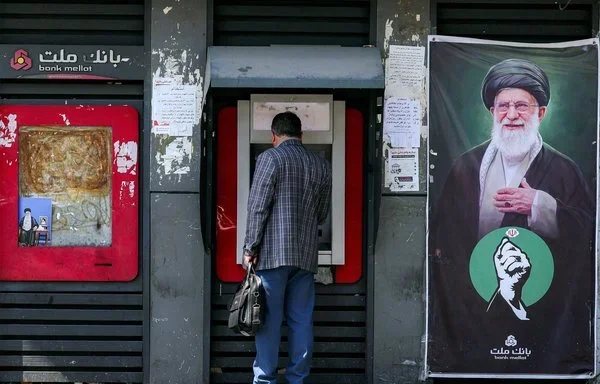
By Al-Fassel |
The United States has fundamentally redefined Iranian shadow banking as a targeted, intelligence-led financial threat rather than a generic evasion tactic.
The Department of Treasury identified a complex web of exchange houses, front companies and trading firms enabling sanctioned entities to access global dollars.
A massive financial analysis narrowed the scope to transactions in 2024, totaling roughly 9 billion dollars in potential Iranian illicit activity.
Researchers discovered that 96 percent of this volume involved entities based in the United Arab Emirates, Hong Kong or Singapore hubs.
Critically, a small cohort of 166 Iran-linked companies accounted for 95 percent of this activity.
Oil buyers based in Singapore and the UAE frequently sent transfers to Iran-controlled entities.
Mapping these specific geographic patterns allows officials to systematically sanction key intermediaries, cutting off procurement firms and shell companies from global finance.
Targeting key financial chokepoints now
The Treasury now provides financial institutions with specific, actionable detection indicators - such as unusual movement through exchange houses - rather than relying on outdated warnings.
By prioritizing these high-impact nodes rather than chasing isolated suspicious payments, the US can disrupt entire procurement and laundering networks more effectively.
Federal authorities are converting Bank Secrecy Act (BSA) reporting into actionable intelligence by fusing Suspicious Activity Reports across multiple major financial institutions.
Systematic disruption of illicit revenue
Instead of merely sanctioning end-user companies, the Office of Foreign Assets Control (OFAC) is aggressively targeting the exchange houses and principals that organize these settlements.
The US Treasury is systematically dismantling the Rahbar companies that act as offshore banking proxies for sanctioned entities to manage overseas shell firms.
As part of 2026 Economic Fury, the Treasury targeted Rahbar networks tied to Bank Melli, Shahr Bank, Bank Sepah, Bank Mellat and other Iranian banks.
These systemic disruptions target the institutional back office of Iranian sanctions evasion, including coordinating invoices and foreign-currency accounts.
American agencies are systematically disrupting the ability of the regime to convert and repatriate revenue derived from oil sales.
Treasury actions against exchange houses target their ability to swap Chinese yuan proceeds for more usable global currencies easily.
By leveraging access to the dollar and correspondent-banking system, the United States raises the operational cost for foreign financial institutions.
Recent measures proposed against specific banks demonstrate that facilitating Iranian shadow banking now carries severe, tangible risks for international partners.
In August 2026, the US targeted Banque Misr UAE, followed by OFAC’s September designation of Türkiye’s Golden Global Bank for facilitating illicit Iranian transactions.
The Department of Justice also pairs this disruption with court-ordered forfeiture to remove millions of dollars from illicit networks.
These efforts demonstrate that the United States is effectively shrinking the financial space available for regional gray zone activities.