Economy
Syria completes major Arab gas pipeline expansion
Syria finalizes a key pipeline expansion and reopens a national training facility, boosting domestic energy capacity and regional transit capabilities.
By Samah Abdul-Fattah |
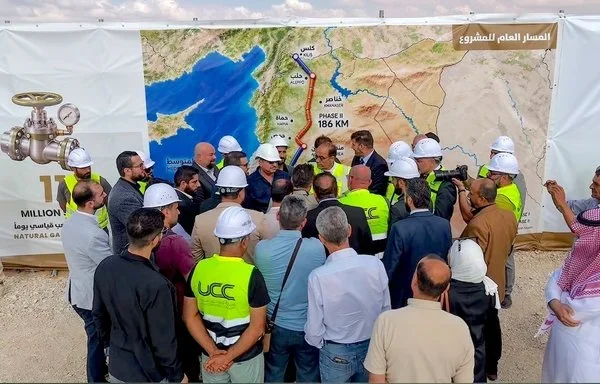
The Syrian Petroleum Company has finalized on September 29 a pivotal expansion of the Arab Gas Pipeline, significantly bolstering domestic and regional energy infrastructure.
This strategic project successfully integrates the final link connecting Jordan and Turkey via Syrian territory.
The expansion adds 186 kilometers to existing lines, creating a comprehensive 566-kilometer network across the country.
Operators successfully installed three advanced compression units in the Furqlus area, significantly increasing overall transmission capacity.
The network now facilitates a robust flow of 11 million cubic meters of gas daily.
This technological upgrade provides critical storage flexibility, essential for managing production sources and ensuring consistent supply.
Through key spur lines, the project will also deliver vital gas to Lebanon, offering much-needed support to its faltering energy infrastructure.
By securing these connections, Syria reinforces its long-standing role as a vital regional transit corridor for energy.
Training future energy sector specialists
Complementing infrastructure growth, the Syrian Petroleum Company reopened its National Training Center after a 12-year operational hiatus.
Extensive rehabilitation efforts transformed classrooms and workshops, ensuring the facility now meets rigorous international industry standards.
It features a sophisticated gas plant simulator, allowing trainees to practice operations before entering the field.
This center serves as a service institution dedicated to cultivating a new generation of skilled petroleum specialists.
By providing hands-on experience, the facility bridges the gap between theoretical knowledge and the demands of modern energy management.
Mahmoud Mustafa, an economic expert and professor at Damascus University emphasizes that these developments transcend simple transit logistics, representing a crucial lifeline for Syrian industry.
"This infrastructure is the heartbeat of national recovery, directly fueling factories and power plants with essential resources," he told Al-Fassel.
The modernized training center solves the persistent issue of workforce fragmentation caused by years of conflict.
"Developing a skilled, technologically proficient generation is the only sustainable way to preserve and protect our energy sector," Mustafa said.
Completing this project reflects growing confidence in regional stability and the government's ability to protect critical cross-country assets.
By prioritizing these energy developments, the state takes a decisive step toward stabilizing its economy and rebuilding vital infrastructure.