Security
Houthi siege turns Taiz's waste into growing health catastrophe
A blockade preventing access to Taiz’s main landfill has left hundreds of thousands exposed to mounting waste, toxic pollution and escalating disease outbreaks.
By Faisal Abu Bakr |
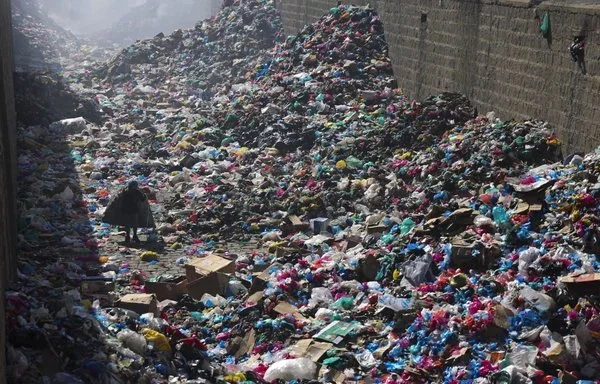
The Houthi-imposed siege on Yemen's Taiz city has deepened an escalating waste crisis, turning residential neighborhoods and flood channels into growing sources of environmental contamination.
Environmental experts warn that mounting garbage and restricted humanitarian access are creating conditions for disease outbreaks, while a crippled healthcare system struggles to respond.
The crisis has intensified since early October, when sanitation trucks lost access to the main landfill west of the city, which remains under Houthi control.
With disposal routes blocked, garbage has accumulated across densely populated neighborhoods and flood channels, threatening the daily lives of hundreds of thousands.
On November 6, the SAM Organization for Rights and Freedoms warned that restrictions on waste removal resulted in 600 tons of garbage accumulating daily.
The organization cautioned that the mounting waste threatens air and water quality while creating conditions conducive to the spread of infectious diseases.
Its findings point to a deteriorating health situation, with suspected dengue fever cases increasing by 26 percent and watery diarrhea cases rising by 22 percent.
The proportion of suspected cholera cases also climbed from 57 percent to 77 percent, while deaths among children under five increased by 66.7 percent.
Waste accumulation fuels environmental disaster
Olla al-Sakkaf, head of an environmental organization in Taiz, told Al-Fassel that the growing waste accumulation has become an environmental and public health disaster.
"The unchecked accumulation of garbage inside residential neighborhoods and flood channels is exposing residents to serious environmental contamination and potentially life-threatening health hazards," she said.
"Residents increasingly resort to burning garbage because regular collection services have collapsed, exposing communities to toxic emissions," Al-Sakkaf warned.
Siege deepens humanitarian and medical crisis
The environmental emergency has worsened alongside renewed Houthi restrictions on access to Taiz.
Following an escalation in September, alternative routes into the city were closed, further tightening a siege imposed since 2015.
The blockade has contributed to shortages of fuel, medicines and medical supplies, as fever cases and illnesses increase and hospitals struggle to accommodate war casualties.
"With more than 80 percent of healthcare facilities out of service, the remaining hospitals are facing overwhelming pressure and increasingly limited capacity to admit patients," al-Sakkaf said.
The blockade is also obstructing humanitarian assistance, leaving vulnerable communities increasingly isolated from urgently needed relief.
More than 52,000 children already suffering from acute malnutrition face additional threats as deteriorating sanitation and escalating epidemics compound their vulnerability.
Without immediate action to restore waste collection, reopen humanitarian routes and strengthen healthcare services, Taiz risks sliding deeper into an environmental and public health catastrophe.