Security
Baghdad, Damascus launch historic strategic partnership
Iraqi Prime Minister Ali al-Zaidi visits Syria to solidify security ties and launch transformative economic projects in a new era.
By Anas al-Bar |
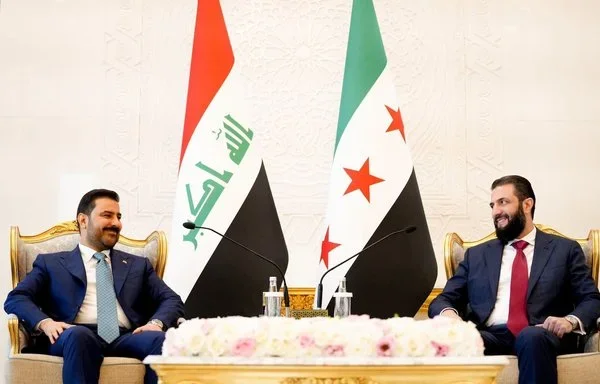
Iraqi Prime Minister Ali al-Zaidi traveled to Damascus on October 28 to meet with Syrian President Ahmed al-Sharaa.
This landmark visit signifies the first official trip by an Iraqi Prime Minister since the Assad regime collapsed in 2024.
Political science expert Issam al-Faily said that this summit reflects a decisive desire to open a transformative chapter in their bilateral relations.
"Both nations aim to transcend the legacy of past conflicts and reject the restrictive politics of regional axes," he told Al-Fassel.
Leaders are now prioritizing shared interests to establish strategic partnerships that strengthen their standing on the regional and international stage.
Securing the shared border strip
Security concerns dominated the talks, particularly regarding the 600-kilometer border strip shared between the two sovereign nations.
Both governments prioritize closing unauthorized crossing points to deny safe harbor to "Islamic State of Iraq and Syria" (ISIS) cells and criminal smuggling syndicates.
Al-Faily emphasized that "lasting security depends on high-level field coordination designed to neutralize threats before they compromise national stability."
Strengthening border fortifications remains paramount, asserting that sovereignty resides exclusively with official state security forces rather than armed groups.
Intensifying military momentum and proactive security measures will ensure that neither country remains vulnerable to infiltration or contraband trafficking.
Transforming regional economic trade horizons
The visit also inaugurated broad economic horizons, paving the way for a durable partnership ensuring long-term national development.
Central to this strategy is the revival of the Baniyas oil pipeline through a three-year contract with Chevron.
This project grants Iraq a strategic Mediterranean outlet, effectively bypassing the logistical risks and high costs associated with the Strait of Hormuz.
For Syria, this transit corridor promises substantial treasury revenue while establishing the nation as a vital regional energy hub.
The leaders also unveiled an ambitious plan for agricultural integration across a massive shared area of 100 million dunums.
This initiative aims to create a regional "breadbasket" capable of feeding 130 million people while developing large-scale industrial processing projects.
Discussions also focused on boosting the exchange of consumer goods, upgrading infrastructure and removing logistical obstacles to commercial movement.
Both nations explored investment opportunities in manufacturing and construction, alongside the establishment of free zones for host industrial enterprises.
By consolidating this reciprocal partnership, Iraq and Syria are poised to restore stability and transform their standing on the international stage.