Security
Exposing China's network supporting Iran’s Mahan Air
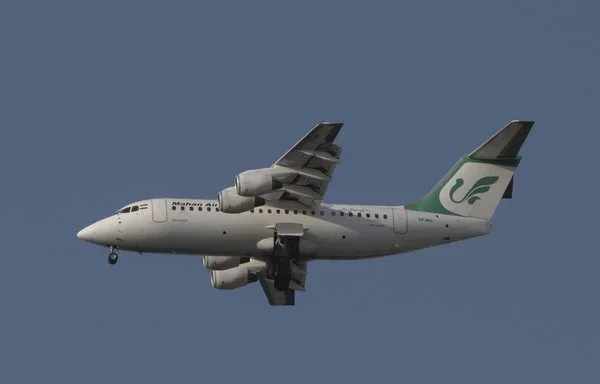
Mahan Air uses complex global networks to bypass US sanctions, while American authorities tighten controls to disrupt these critical illicit supply chains.
By Al-Fassel |
Mahan Air remains a vital logistical tool for the Iranian regime, facilitating the movement of weapons and personnel for the Islamic Revolutionary Guard Corps (IRGC).
Despite strict US sanctions, the airline leverages an extensive, shadowy network of overseas intermediaries to maintain its global operations.
These networks allow the carrier to obtain aircraft, spare parts and essential services while masking the identity of its Iranian end-users.
Illicit networks fuel Iranian operations
Third-country commercial representatives act as the primary interface for Mahan Air, shielding the carrier from direct international scrutiny.
By fragmenting transactions, freight forwarders and brokers ensure that individual service providers never see the full picture of the logistics.
This deceptive strategy heavily relies on Chinese front companies to acquire sensitive goods, including dual-use electronics and aviation components.
For instance, specific Chinese entities have managed Mahan's passenger travel, cargo logistics and fleet maintenance under ostensibly legitimate business identities.
Shanghai Wings and Elite International Travel, led by Tang Xin, faced July 2026 US sanctions for managing Mahan Air’s passenger travel and cargo logistics.
The pattern is cyclical; when US authorities designate one support node, the network simply reconstitutes itself using new entities elsewhere.
US countermeasures disrupt global support
Washington is aggressively targeting these support nodes by utilizing broad executive authorities to dismantle the carrier’s commercial enablers.
Rather than focusing solely on the airline, the US Department of the Treasury’s Office of Foreign Assets Control (OFAC) now targets General Sales Agents (GSAs).
It also targets procurement facilitators and financial institutions providing critical support to Iranian aviation networks.
The US applies the 50 percent rule, ensuring that affiliates and front companies cannot escape sanctions through corporate restructuring.
Recent determinations target Iran's entire aviation sector, reducing the carrier's ability to shift its illicit operations between entities.
Disrupting aircraft transfers is another priority, as Mahan Air actively seeks to sustain its aging fleet through illicit procurement schemes.
Treasury’s Financial Crimes Enforcement Network (FinCEN) alerts direct financial institutions to detect suspicious aviation-procurement activity, even when direct Iranian involvement remains carefully hidden.
Beyond just blocking payments, the US is applying significant secondary-sanctions pressure on foreign banks facilitating transactions for these designated entities.
This creates leverage over non-US institutions, forcing them to choose between maintaining access to the American financial system and supporting illicit trade.
By combining these financial sanctions with strict export-control enforcement, the United States raises the cost of supporting Iranian operations.
These synchronized efforts aim to isolate Mahan Air’s network, protecting national security interests within the Middle East region.